

ABOUT IPA
Innovation Platform Agency, Japan
The Innovation Platform Agency, Japan (IPA) implements innovation in society. See the role behind our new name at CEATEC 2026.

Innovation Platform Agency, Japan
CEATEC 2026
to Makuhari Messe, X Park | IPA Booth 6H111
Visit CEATEC 2026 Official Site
STATEMENT
Taking digital as a given, we envision the society that lies beyond it, connect diverse perspectives, and design and implement the foundations of society together.
That is the role IPA must play.
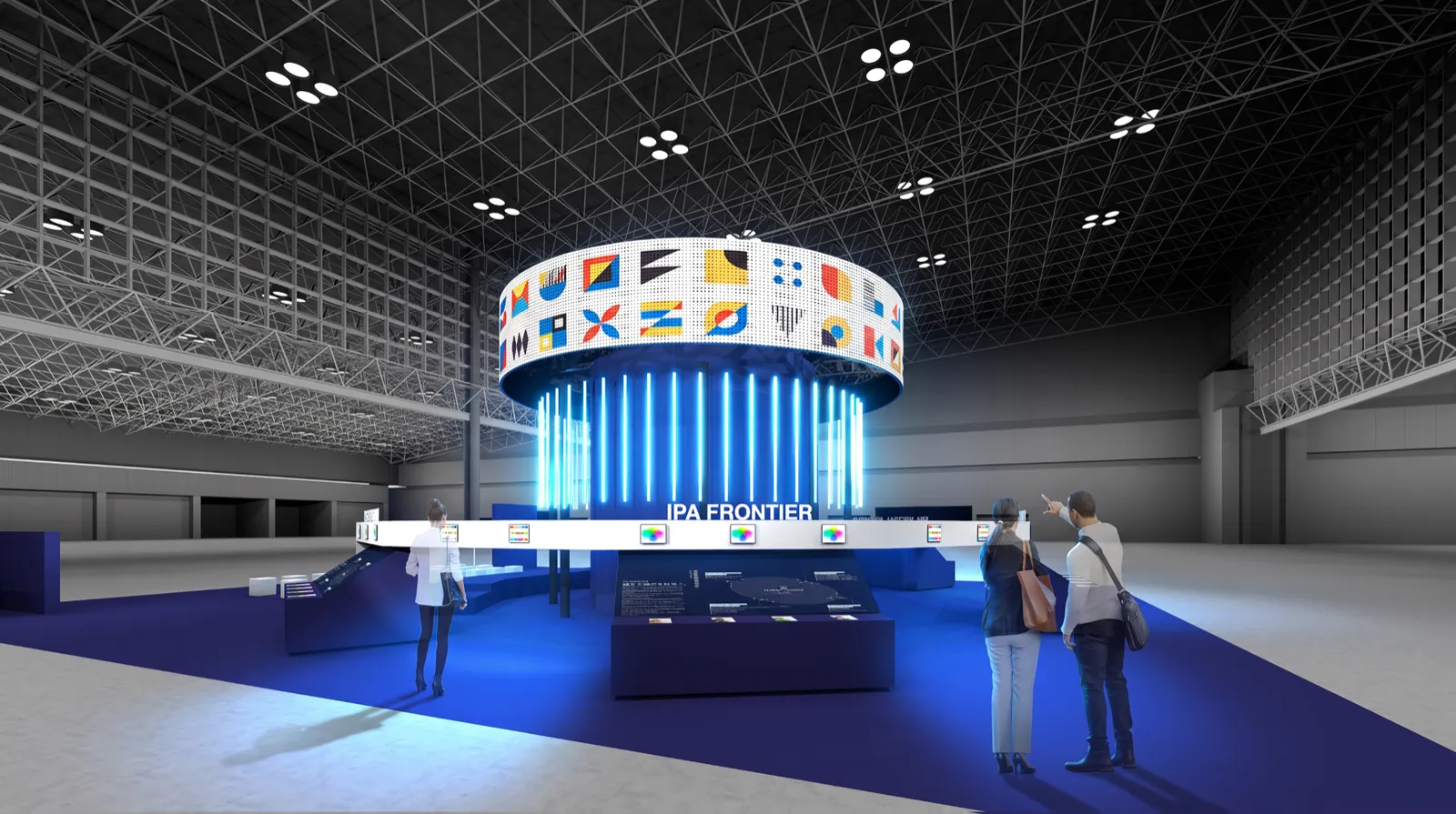
We have named this work "PROTOCOL ENGINE" and made it the theme of this year's exhibition.
Please experience the concept for yourself through our participatory installation.
ABOUT IPA
The Innovation Platform Agency, Japan (IPA) implements innovation in society. See the role behind our new name at CEATEC 2026.
INSTALLATION
 How do you see the digital society ahead?
 We gather the voice of each and every person. Those voices overlap with one another and are presented across the entire venue. In a sense, this installation is an expression of what IPA does. Your voice may resonate with someone, or it may become a question for someone else. Both are welcome. Out into the CEATEC venue, and on into society beyond, enjoy the feeling of many different views coming together, changing shape as they go, and becoming one great flow.
See today's formToday's Form - today's record is live
BOOTHS
IPA believes that for innovation to emerge continuously, the six elements below must interact with one another through the relationships of design, trust, connection, security, implementation and circulation. They do not work while they merely exist separately; the six must connect and act as one. At the venue we present Social System Design at the main booth and the other five at the sub-booths. We look forward to seeing you.
Architected by IPA
Give shape to concepts as institutions and rules.
Framed by IPA
Make the conditions of trust explicit, and establish trust.
Connect data and technical infrastructure on the premise of sharing.
Secure safety and continuity.
Turn exploration into implementation.
Develop and mobilize talent.

Special Session
11:40 to 12:20
Mini Stage, IPA Booth 6H111
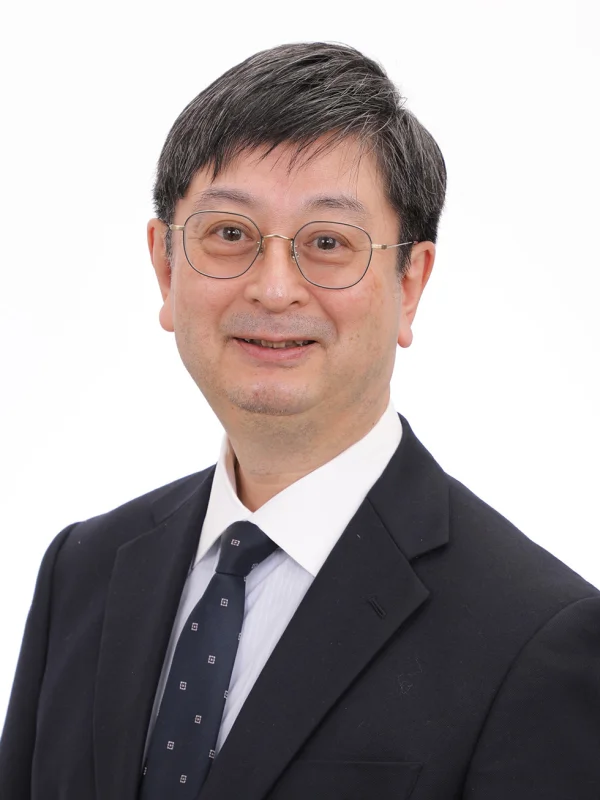
Featuring KOKURYO Jiro and SHIBUYA Keiichiro, this special dialogue brings together perspectives from academia and the arts to explore what it means to be human in an AI-driven society. The discussion will examine the evolving relationship between technology and human expression, as well as the importance of shared frameworks and protocols for building a trusted digital future.
Conference
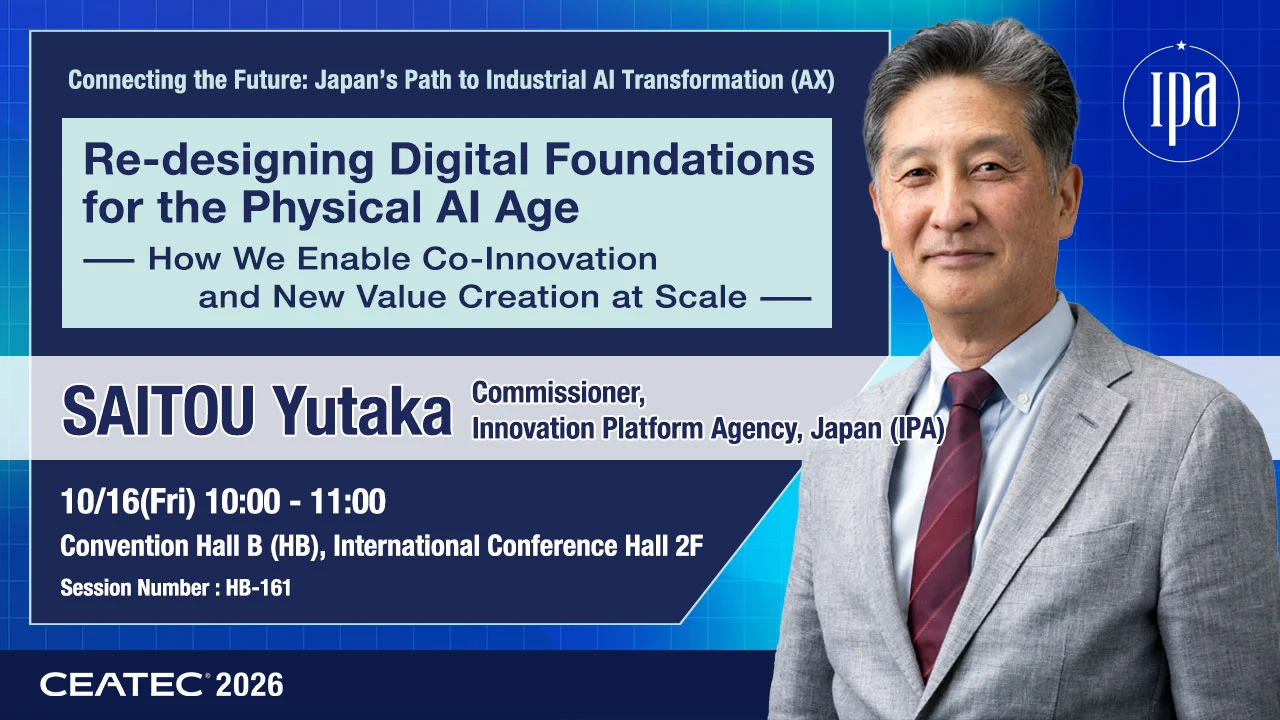
10:00 to 11:00
Convention Hall B (HB), International Conference Hall 2F
As AI reshapes industry and society, competitive advantage is shifting from products to ecosystems. This presentation explores how Physical AI, fueled by shared real-world data and cross-industry collaboration, is redefining value creation and transforming human decision-making and action. Its central argument is clear: trust, not technology, will be the defining infrastructure of the digital age. Drawing on Japan's cultural strengths, it presents a distinctive vision for growth built on trust, co-creation, and connected ecosystems.
T-Stage
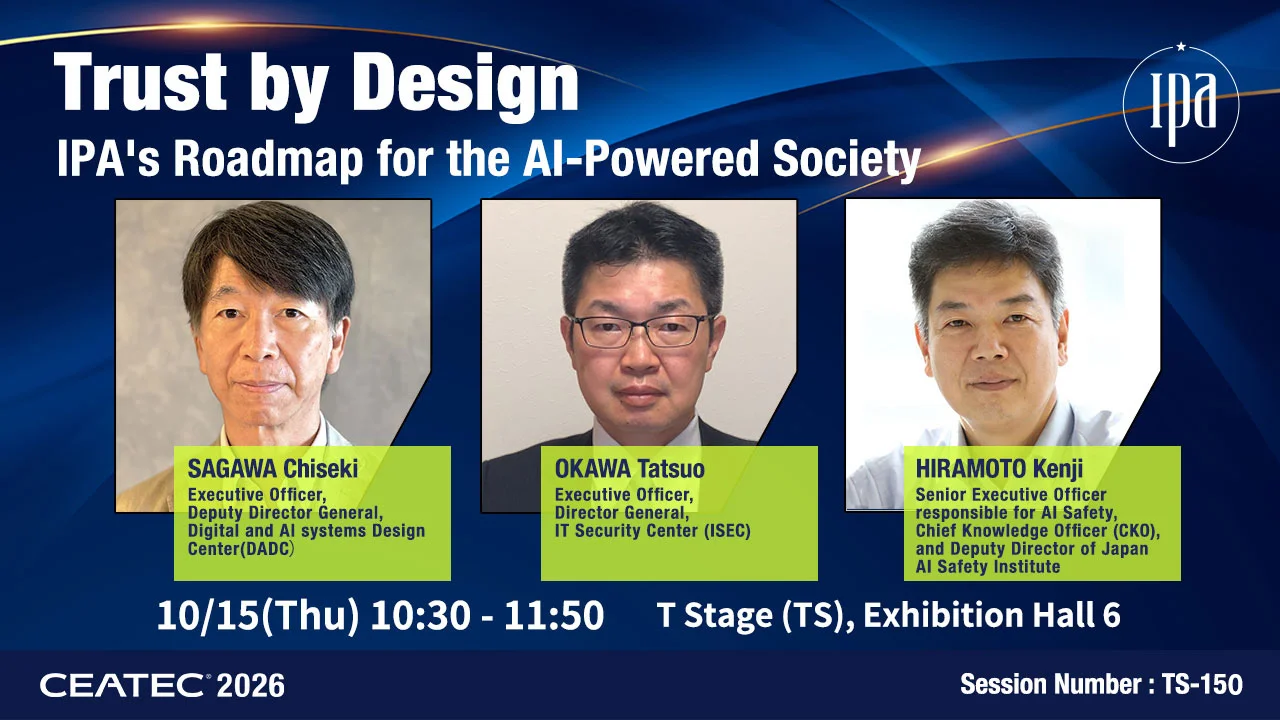
10:30 to 11:50
T Stage (TS), Exhibition Hall 6
As AI transforms society and industry, it is also creating new challenges including cybersecurity threats as well as trusted AI. In this session, IPA will introduce its function of social architecture design among AI-powered society, the evolving security measures needed to address AI-driven risks, as well as the principles of AI Safety that enable organizations and individuals to adopt AI with confidence. This session will highlight how “trust-enabled connections” can be implemented into an AI-powered society and look ahead to the front lines of platform development make it possible.
T-Stage
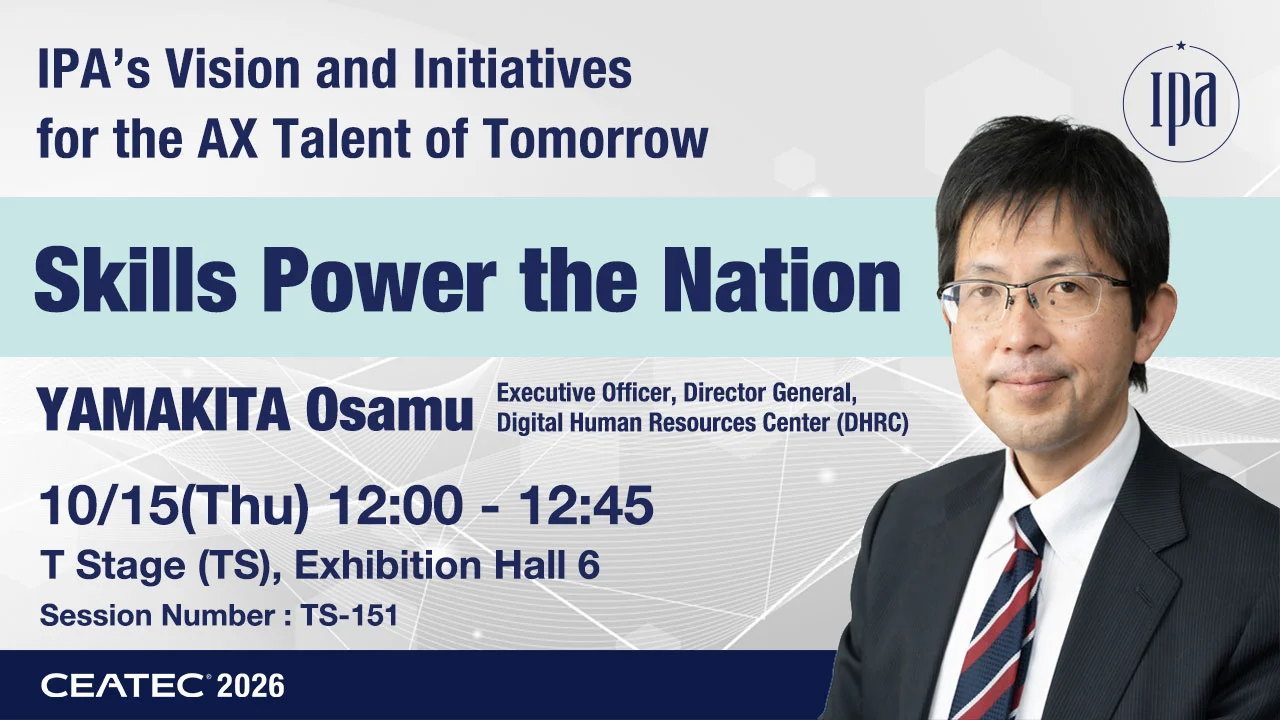
12:00 to 12:45
T Stage (TS), Exhibition Hall 6
As generative AI and data-driven innovation rapidly reshape industries, the skills required of digital professionals are evolving at an unprecedented pace. In this session, IPA will share its vision for developing the next generation of digital and AI-transformation (AX) talent in Japan. Drawing on the Digital Skill Standards (DSS), we will explore why Japan’s national IT certification exams are undergoing their most significant revision in nearly three decades, highlight the key changes, and discuss the future direction of skill assessment and talent development. Join us in envisioning a new skills ecosystem that empowers continuous learning and accelerates individual growth and innovation.
15:00 to 15:20
This session has been rescheduled. Please see the October 15 listing for the session details.
Session time
(Before) Tuesday, October 13, 15:00 to 15:20
11:30 to 11:50
Cyberattacks increasingly target weak points in the supply chain, such as contractors and business partners, so damage at a single company can spread to many other companies and services. The SCS Assessment Program lets companies check their security measures against a common standard and keep improving them. By standardizing target measures and assessment methods, it serves as a common language for sharing security requirements between companies. This talk explains why the program was created and its main features, introduces an assessment approach and support measures that small and medium-sized enterprises can easily use, and describes how the program aims to raise trust across the entire supply chain.
13:00 to 13:20
Strengthening of regulations on chemical substances contained in products, such as REACH, and the need to achieve resource circulation have become urgent challenges. To address these challenges, the business community is under strong pressure to improve operational efficiency. This session introduces the digitalization of chemical substance information transmission through CMP (Chemical and circular Management Platform) that seamlessly connects the entire supply chain, from upstream to downstream, a use case of the Ouranos Ecosystem initiative, scheduled to launch in October.
15:00 to 15:20
This session introduces the new examination scheme planned for launch in FY2027 for the Information Technology Engineers Examination and the Registered Information Security Specialist Examination. It outlines the background and objectives of the revision and the overall framework of the new scheme. First, the session examines the challenges surrounding the development of digital talent in Japan, based on the following: the current state of DX in Japan, the United States, and Germany; and the outcomes of DX initiatives at Japanese companies, talent shortages, and the current state of data utilization. It then provides an overview of the schedule leading up to the launch of the new scheme and the key changes, drawing on the following: the new examination category structure and question formats; proposed revisions to the examination scope; draft syllabi; and sample questions.
12:30 to 12:50
With the arrival of the AI revolution, algorithms are becoming commoditized and "Data is Eating the World" is now the real industry landscape. In this environment, the source of competitive advantage in software is shifting to data. As Agentic AI spreads and the frontier moves from "data scarcity" to "context scarcity," domain-specific business context is beginning to emerge as the most critical asset in the enterprise. In this session, the Chief Architect will trace the history of AI and data management technologies and explain one of the latest technology trends: Open Data Spaces, a new generation of distributed data management technology that Japan is leading.
13:00 to 13:20
AI is being used in more and more areas of society and business, creating new value and services. As AI becomes closely involved in daily life and work, it is essential that people can trust its outputs and decisions. One foundation of AI trustworthiness is the data used for training, evaluation and operation. As agentic AI and physical AI advance, the types, range and volume of data that AI handles are growing, and high-quality data is becoming ever more important. This talk outlines the role of data in the AI era, how to think about data quality that fits its purpose, the lifecycle from design and collection through operation and improvement, and the many quality characteristics involved, along with key points for improving data quality.
15:00 to 15:20
As more and more things (IoT) are connected to the internet and provide convenient services, cyber attacks targeting IoT products are intensifying. This makes IoT products equipped with proper security measures increasingly important, yet until now, there was no way to tell such products apart from the outside. In March 2025, IPA launched JC-STAR, Labeling Scheme based on Japan Cyber-Security Technical Assessment Requirements, which grants conformance labels to IoT products meeting defined security requirements and makes their security visible. This talk explains the purpose of JC-STAR, how the scheme works, its progress over its first year, and the latest developments.
11:30 to 12:00
How do MITOU alumni turn their ideas into reality and carry them into the future? Shunsuke Aoki founded teamLab as a student, served as CTO of pixiv, and then started Yukai Engineering, which has created unique hit products such as BOCCO and AMAGAMI HAM HAM. In this session, he talks about how his ideas led to starting companies and about his experience in MITOU. Risa Nagata has developed appealing products that fuse technology and fashion, bringing fresh energy to the fashion world. She talks about what she learned through meeting her project manager, Yoichi Ochiai, and other MITOU participants, and the sense of growth she found through trial and error. This engaging talk session conveys the joy of making things and the moments when ideas move society.
13:00 to 13:20
While some companies are achieving results with digital technology and AI, other companies and regions remain at the planning or trial stage and need support to implement their ideas and create new value. IPA has supported companies in understanding their current situation, setting management direction, building structures to drive change, and communicating inside and outside the organization. Building on that experience, this talk presents a vision for sharing companies' results, data and lessons within regions and connecting them to the next challenge, and for places where regions develop talent and companies and support organizations bring together knowledge and data to create new value. The “D” starts with Digital, but the value we aim for is not just one thing. We share a future in which one company's transformation becomes a strength for its region, and regional efforts lead to transformation across Japan.
15:00 to 15:20
This talk explains the main revisions in Digital Skill Standards (DSS) Ver.2.0, revised in April 2026. Developed by the Ministry of Economy, Trade and Industry and IPA, DSS provides common guidelines that set out the knowledge, skills and mindset required of people who drive DX. Ver.2.0 introduces a new Data Management Type and revises roles in the Business Architect and Designer Types, among other changes. The talk explains these main revisions, along with the background and key points behind them.
Visit CEATEC 2026 Official Site
SHARE
Share your experience at the booth.